
Eye Movement Desensitization and Reprocessing (EMDR) in West Houston
What is EMDR?
EMDR (Eye Movement Desensitization and Reprocessing) is a research-supported therapy that helps the brain and body heal from distressing or overwhelming experiences. It uses an 8-phase approach designed to support the brain’s natural ability to process and resolve painful memories.
Think about what happens when you accidentally cut your finger while cooking. You don’t have to consciously tell your body how to heal. Your brain, immune system, and nervous system automatically work together to repair the wound.
But if something gets in the way, like a splinter, the healing stalls, and the pain continues. Once the blockage is removed, healing can resume.
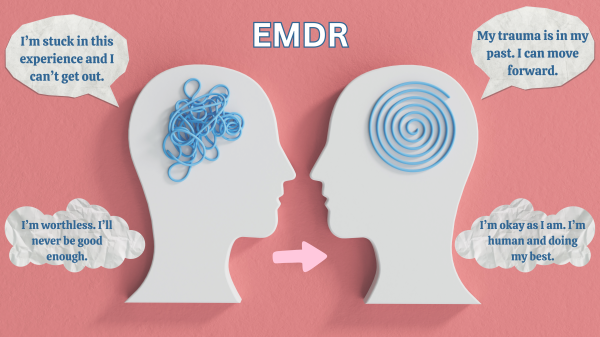
EMDR works in a similar way for emotional wounds. When a distressing experience isn’t fully processed, it can get “stuck,” leading to ongoing symptoms like anxiety, fear, emotional reactivity, or avoidance. EMDR therapists help gently remove those blocks so the brain can finish its natural healing process, often resulting in meaningful symptom relief and resolution.
EMDR has been shown to be effective in treating:
• Trauma and PTSD
• Anxiety
• Depression
• Distressing life events
• OCD
If you’ve ever felt like you know something is in the past, but your body still reacts like it’s happening now, EMDR may help bridge that gap.
Considering EMDR for your child?
Many parents worry that EMDR will require their child to talk in detail about painful or frightening experiences. In reality, EMDR is designed to be developmentally sensitive and child-centered (for ages 12+). Children do not need to give a detailed verbal account of what happened, and sessions often incorporate play, drawing, movement, or storytelling. The therapist carefully paces the work, prioritizing safety, regulation, and the child’s sense of control. EMDR helps children process big feelings and experiences in a way that feels manageable. This often leads to improved emotional regulation, reduced anxiety, and increased confidence over time.
What does EMDR feel like in session?
EMDR sessions are typically calm, structured, and supportive. After building coping skills and a sense of safety, the therapist uses gentle bilateral stimulation (such as eye movements, tapping, or sounds) to help the brain process stuck memories. Clients often notice thoughts, body sensations, emotions, or images shifting naturally without having to force or analyze them. Many people describe EMDR as surprisingly tolerable and even empowering, with distress decreasing as the brain makes new, healthier connections.
Interested in EMDR for yourself or your child? Schedule a consult call with Dr. Jennifer Roberts to explore more!
